
Recruitment Social Media Content: How to Create Posts That Attract Top Talent
Recruitment social media content is now one of the powerful tools for attracting top talent. With 73% of job seekers aged 18–34 finding their last job through social media, it’s clear that platforms like LinkedIn, Instagram, and TikTok aren’t just for sharing updates – they’re where job seekers evaluate companies and decide if they want to apply. To stand out, your recruitment posts need to go beyond job listings.
If you’re new to this concept, start with our guide on what social media recruitment is and how it works
Strong recruitment social media content showcases culture, values, and real employee experiences to attract the right candidates. Here’s how:
- Showcase your company’s workplace and values: Share office tours, team events, or DEI initiatives.
- Highlight employee stories: Candidates connect with real career journeys and testimonials.
- Create engaging job announcements: Use clear visuals, specific details (like salary), and strong calls-to-action.
- Use the right platforms: LinkedIn for professionals, TikTok and Instagram for younger audiences.
- Post consistently: Aim for 2–5 posts per week on LinkedIn and adjust for other platforms.
Real examples, like Texas Roadhouse receiving 400,000 applicants in a year through social media, prove these strategies work. Start by focusing on authentic storytelling, short-form videos, and interactive content to attract both active and passive candidates. See our roundup of social media recruitment examples from companies doing it right.
Let’s explore how to craft posts that drive results.
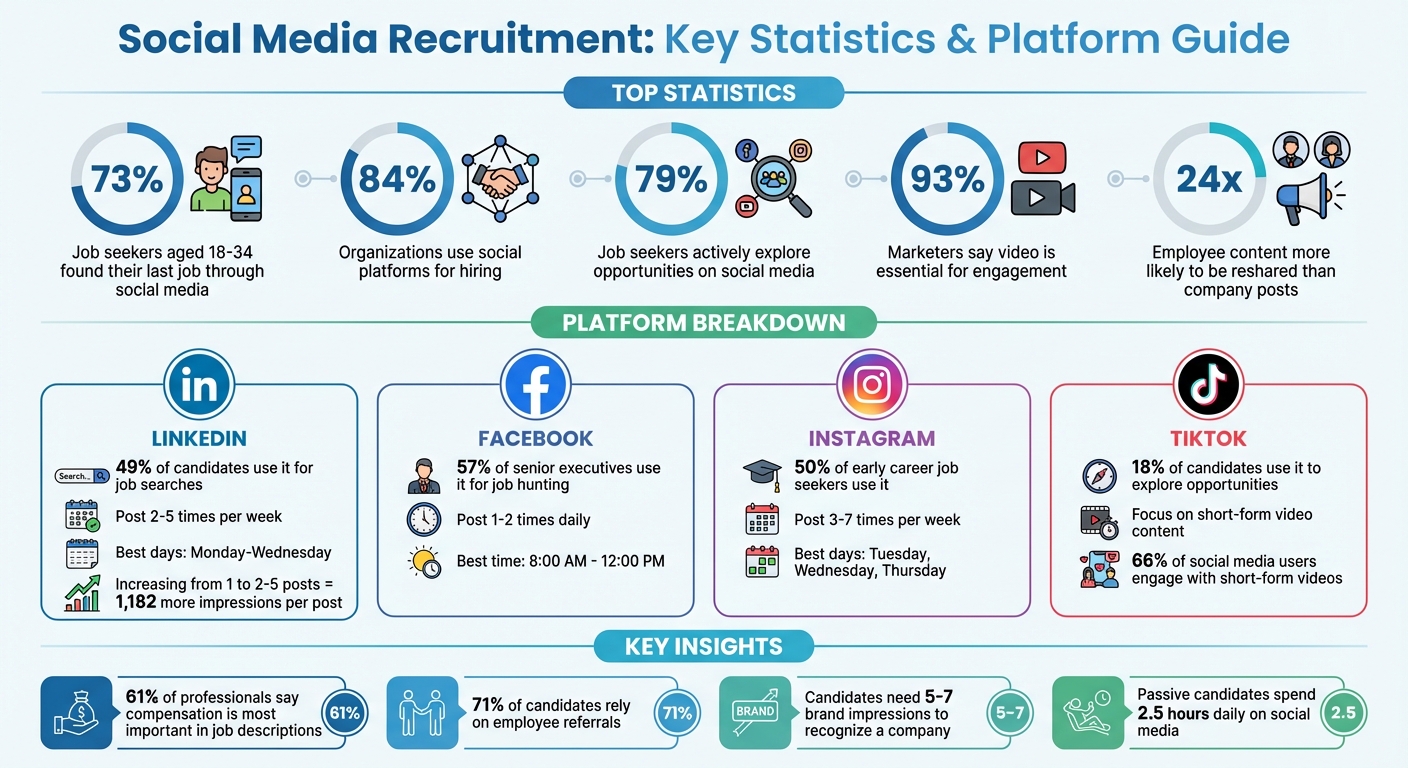
Recruitment Social Media Content Statistics: Platform Usage and Engagement Metrics
The Most Effective Social Media Recruitment Campaign Strategy
Types of Recruitment Social Media Content That Work Today
While only 57% of job seekers today turn to social media to find their next role, they’re doing more than just browsing job listings. They’re evaluating your company to see if it’s a place where they can thrive. The best recruitment content goes beyond job postings, offering a genuine glimpse into your workplace and culture. Here’s how to create content that resonates.
Company Culture and Values Content
People want to know what it’s really like to work at your company, and behind-the-scenes content is a powerful way to show them. Things like office tours, day-in-the-life videos, and clips from team events consistently outperform traditional corporate messaging. In fact, 93% of marketers say video is an essential tool for engagement, and short-form videos grab the attention of 66% of social media users.
Content that highlights your company’s values can also make a big impact, especially with younger job seekers. Share posts about your diversity, equity, inclusion, and belonging (DEI&B) initiatives, community service projects, and environmental efforts. Show your team members as real people – whether they’re pursuing hobbies, volunteering, or spending time with family. Skip the stock photos and use real images of your employees to create a more personal connection.
“When you think about employer branding and how you articulate your culture to attract, engage, and retain talent, you need to go beyond performative. Candidates can see through it. They’re tapping into their networks to understand who you really are – beyond what your career site says.”
– John Graham Jr., VP of Employer Brand, Diversity, and Culture, Shaker Recruitment Marketing
Next, let your employees tell their own stories.
Employee Stories and Testimonials
Content shared by employees is 24 times more likely to be reshared than posts from a company’s official channels. Highlight real career journeys and achievements to show the opportunities for growth within your organization.
For example, in March 2022, CVS Health shared a Facebook testimonial from an employee who returned to work after maternity leave, emphasizing their commitment to work-life balance and family support. Similarly, in 2025, Agrace spotlighted a nurse’s journey to her “dream job” with the company. These stories make career paths feel relatable and achievable.
Encourage your team to post their own experiences on their personal social media accounts. Whether it’s sharing their home-office setups or describing a memorable moment at work, this authentic, low-effort approach resonates particularly well with passive candidates, who spend an average of 2.5 hours daily on social media.
Job Opening Announcements
Once you’ve built trust with authentic storytelling, job announcements can help candidates take the next step. Start with an eye-catching hook like “We’re hiring!” and include all the key details: job title, location, qualifications, salary range, and benefits. Since 61% of professionals say compensation is the most important part of a job description, be upfront about salary and perks – vague terms like “competitive pay” don’t cut it.
For platforms like LinkedIn or Instagram, consider using a carousel format to break up information. Begin with an engaging visual or headline, then dive into the specifics, such as responsibilities and qualifications. Highlight standout benefits like unlimited PTO, flexible hours, or unique bonuses to grab attention. Don’t forget to include a direct link to the application page, and adding an application deadline can create a sense of urgency.
A great example of this approach is Campbell Soup Company’s 2022 recruitment campaign on Twitter. They paired a nostalgic video celebrating their history with the tagline “Grow your roots at Campbell!” The campaign featured a young plant as a visual metaphor, blending the company’s heritage with opportunities for growth.
What to Include in High-Performing Recruitment Social Media Content
Now that you know what types of content perform well, let’s dive into the key elements that turn ordinary job posts into standout recruitment content. These components help your posts connect with top candidates and encourage them to take action.
Eye-Catching Images and Videos
Visuals are a must on social media. Platforms like LinkedIn and Instagram favor native videos – those uploaded directly instead of linked from sites like YouTube – because they keep users engaged longer. Short, authentic clips perform better than overly polished corporate videos. For instance, in 2021, UPS shared an employee spotlight featuring systems engineering manager Dameion Drake on LinkedIn. The post included a photo and a personal quote about his global impact, generating over 345 reactions and 11 comments. This approach added a personal touch to their engineering department.
Real workplace visuals also resonate deeply. Tetra Tech, for example, shared a “Photo from the Field” showing an engineer conducting a dam survey in snowy northern Quebec. This adventurous and genuine snapshot earned 349 reactions and 5 comments on LinkedIn, appealing to candidates drawn to outdoor-focused roles. Avoid generic stock photos whenever possible. If stock imagery is unavoidable, make sure it aligns with the job and feels authentic. Team photos showing real employees at work or during team events are far more inviting than stiff, staged corporate shots.
Carousel posts are another great option, especially on LinkedIn and Instagram. They allow you to break down information into easy-to-swipe slides. Start with a bold, attention-grabbing slide, then use additional slides for details like job responsibilities, qualifications, and perks. Since half of mobile usage happens on social and communication apps, keep text on visuals short and legible on small screens. Incorporate branded elements – like your logo, brand colors, and typography – to reinforce your company’s identity.
Clear Calls-to-Action
Once you’ve grabbed attention with visuals, guide candidates with a clear call-to-action (CTA). A strong CTA eliminates confusion about what to do next, turning passive viewers into active applicants. Simple phrases like “Apply now,” “Join us,” or “Start your career today” work best.
Tailor your CTA to the platform. On Instagram, use “Link in bio.” For Stories, “Swipe up” works well. On LinkedIn and Facebook, include direct links to the job application or careers page. If you’re using a carousel post, reserve the final slide for a bold, high-contrast CTA that stands out.
Clear CTAs are essential in recruitment social media content because they turn passive viewers into active applicants.
“All supporting text is customized so the viewer can most easily take the next step, as each channel has different ways of supplying calls to action and links.” – Stories Inc.
Tools like HireLab.io can simplify this process by creating landing pages with built-in CTAs, making it easy for candidates to navigate the application process without hurdles.
Relevant Hashtags
Once your visuals and CTAs are in place, hashtags help expand your reach. Think of hashtags as social media’s search engine – they help your content find candidates who don’t already follow your company. For example, when Emerson announced Elizabeth Adefioye as their first Chief People Officer on LinkedIn, they used hashtags like #culture, #DEI, and #talentdevelopment. The post generated over 2,115 reactions, 118 comments, and nearly 70 shares.
A solid hashtag strategy includes three tiers: branded hashtags unique to your company (like #LifeAtCompany or #CompanyCareers), general recruitment hashtags (such as #hiring or #jobsearch), and niche tags tailored to specific roles (like #RNjobs or #SoftwareEngineering). UPS uses its branded hashtag #UPSjobs to organize recruitment content, making it easier for candidates to explore open positions. You can also use location and role-specific hashtags, like #MarketingJobsNYC, to target candidates in specific areas.
With 54% of active job seekers using social media to find jobs, and Twitter users conducting around 2 billion searches daily, effective hashtag use can dramatically extend your post’s visibility beyond your current followers.
How to Create Recruitment Social Media Content That Gets Results
Creating effective recruitment social media content requires strategy, creativity, and platform-specific optimization. To turn viewers into applicants, your recruitment content need the right mix of strategy and creativity. HR teams looking for a broader tactical framework can explore our guide to recruitment on social media for practical, step-by-step tips.
Here’s how to craft posts that drive results.
Pick the Right Social Platform
Not all social platforms are created equal, so it’s important to choose the ones that align with your hiring goals. LinkedIn is still the go-to platform, with 49% of candidates using it specifically for job searches. If you’re targeting senior executives, 57% of them look to Facebook during their job hunt. For entry-level positions, Instagram draws in 50% of early career job seekers, while TikTok is gaining traction with 18% of candidates using it to explore opportunities.
Each platform has its own vibe, so tailor your content accordingly. LinkedIn thrives on professional updates and career-focused stories, while TikTok is all about casual, entertaining clips that resonate with its audience. Instagram leans into visual storytelling, making it perfect for “day in the life” posts or team celebrations. Want to know where to focus? Ask your employees about their favorite platforms – chances are, your candidates are hanging out in the same places.
Don’t overlook niche platforms, either. Tech recruiters might find GitHub helpful, creative roles could benefit from Behance, and German-speaking markets might see success with XING. Gen Z is increasingly using TikTok to explore career paths, and Twitter hashtags like #NowHiring remain a great way to announce jobs in real time.
Write Clear Headlines and Post Copy
Your headline and opening lines are make-or-break moments. Start with benefits that matter most today – competitive pay, healthcare, flexible schedules, or remote work options – and keep the language simple and accessible. For instance, instead of using a title like “Senior DevOps Engineer III”, go with something more relatable like “Senior Engineer – Help Us Build Tools Used by Millions.”
Keep your copy short and to the point. Social media users spend an average of 2 hours and 6 minutes daily on these platforms, but they’re scrolling quickly. Make it clear that you’re hiring, specify the role, and explain why it’s a great opportunity. For example: “We’re hiring a Marketing Manager in Austin. Lead creative campaigns for a company that offers unlimited PTO and values innovation.”
Adjust your tone to match the platform. LinkedIn posts can lean professional and detailed, while Instagram captions should feel casual and visually engaging. On TikTok, focus on entertaining content first, and then weave in your job opening seamlessly.
Once you’ve nailed the copy, you can use AI tools to refine and amplify your posts for even better results.
Use AI to Improve Recruitment Social Media Content
Platforms like HireLab can take your recruitment posts to the next level. HireLab’s AI-powered campaign builder creates fully optimized recruitment funnels in just minutes. It generates complete job pages with smart forms that pre-qualify applicants, helping reduce drop-offs – all without requiring any coding or design skills. For a deeper breakdown of planning and launching campaigns, read our guide to building high-impact social media recruitment campaigns.
HireLab also automates job distribution, allowing you to post openings to over 200 job boards and social media platforms with a single click. Plus, its built-in analytics track key metrics like click-through rates, reach, and impressions, so you can see what’s working and tweak your approach as needed. For social media, HireLab ensures your content meets each platform’s specs – whether it’s video resolution, orientation, or length – to help your posts perform better in platform algorithms.
“Job posts are now one of our highest drivers of traffic; they consistently perform better than ads promoting products and services.” – Manager of Creative Services and Design, Security Provider
How Often to Post Recruitment Social Media Content
Striking the right balance with posting frequency is key to staying visible without overwhelming your audience. Each platform has its own rhythm, and finding that sweet spot can make a big difference. Post too little, and you risk fading from view; post too much, and you might come across as spammy. Here’s a breakdown of how often to post recruitment content on different platforms.
For LinkedIn, aim for 2–5 posts per week. Increasing from just one post to this range can result in an average of 1,182 more impressions per post and a 0.23 percentage point boost in engagement. If you ramp up to 11+ posts per week, engagement can nearly triple, with about 17,000 additional impressions per post compared to posting just once weekly. These numbers highlight how impactful the right posting frequency can be on LinkedIn.
“Moving from 1 post a week to 2 to 5 is like flipping a switch – LinkedIn starts distributing your content more widely and rewarding you with stronger per-post performance.” – Tamilore Oladipo, Sr. Content Creator, Buffer
Focus your LinkedIn activity on Monday through Wednesday, as these are the days when candidates tend to be most active.
For other platforms, the recommendations vary:
- On Instagram, post 3 to 7 times a week. Businesses often see the best results on Tuesday, Wednesday, and Thursday.
- For Facebook, 1 to 2 posts daily is a good rule of thumb, with the best times being between 8:00 AM and 12:00 PM.
Consistency is more important than sheer volume. Platforms like LinkedIn reward steady, relevant posting. To make this manageable, consider creating recruitment content in batches. For example, you could take an employee testimonial video and rework it into multiple formats – like a short clip for Instagram, a text post for LinkedIn, and a story for Facebook. By planning and repurposing content, you can keep your message fresh without overwhelming your audience or burning out.
10 Recruitment Social Media Content Ideas
These ideas build on earlier strategies by offering practical ways to grab candidates’ attention instantly. Here are ten creative approaches to make your social media recruitment efforts more engaging and effective.
1. Tackle common hiring myths.
Share posts that debunk misconceptions about your hiring process. For instance, explain why salary ranges might not always be listed upfront or why feedback can take longer than expected. Clarify your interview timeline and the purpose behind each step.
2. Highlight the “Five Fs.”
Focus on what matters most to candidates: Fit, Fortune, Family, Flexibility, and Fun. These priorities resonate deeply and can help your posts stand out.
3. Encourage employee-generated content.
Ask your team to share personal stories about their experiences at your company. Authentic voices carry weight – 71% of candidates rely on employee referrals when considering a role.
4. Engage with polls or trivia.
Post interactive content like “Would you accept a counter-offer from your current employer?” or share fun industry facts. This sparks conversations and subtly showcases your expertise without being overly promotional.
5. Revamp job announcements.
Ditch the generic “We’re Hiring” posts. Instead, emphasize unique details about the role, like opportunities for travel or flexible work arrangements, to attract candidates looking for those specific perks.
6. Host live Q&A sessions
Organize real-time sessions where candidates can interact directly with HR leaders or department heads. This builds trust and shows that your team is approachable and transparent.
7. Promote hiring for potential.
Share how you value growth by highlighting the “70% Rule” – hiring candidates who meet 70% of the requirements and investing in their development. A survey by Workable and TalentLMS found that offering professional development boosts employee retention by 58%.
8. Join trending workplace debates
Add your company’s perspective to viral discussions, like “quiet quitting.” This not only boosts your organic reach but also positions your brand as a thoughtful voice in the industry.
9. Offer practical tips for candidates.
Go beyond job postings by sharing advice like “How to optimize your LinkedIn profile” or “Negotiating remote work terms.” Providing helpful resources positions your company as a trusted career partner.
10. Use humor and memes.
When it aligns with your brand, incorporate light-hearted, timely humor. A well-placed meme or joke can make your posts more memorable and shareable.
Feature Employee Career Growth Stories
Highlight real examples of how employees have grown within your company. Share stories of promotions, role transitions, and the training programs that made it possible. Detailing mentorship opportunities and career paths helps candidates envision a future with your organization.
Share Behind-the-Scenes Content
Give candidates a peek into daily life at your company. Post authentic moments from team meetings, project launches, or informal celebrations. Employee takeovers on social media can provide candid insights, while Story Highlights allow prospects to explore your workplace culture anytime.
Announce Urgent Job Openings with Impact
For time-sensitive roles, create posts that grab attention fast. Use bold visuals or short videos with clear messaging, like “Join our marketing team – Hiring NOW.” Include a specific call to action, such as “Apply by January 31st”, and encourage employees to share the post to boost visibility and credibility. A simple 15-second video with bold text can work wonders in creating urgency.
These strategies, combined with engaging formats, can help you connect with the right candidates and make your recruitment efforts more effective.
Conclusion
Successful recruitment social media content relies on genuine storytelling, consistent posting, and data-driven optimization. With a staggering 84% of organizations using social platforms for hiring and 79% of job seekers actively exploring opportunities there, your social presence needs to stand out and connect.
If you’re still evaluating the ROI, explore the key benefits of social media recruitment and why more companies are shifting their hiring strategy.
Focus on creating content that reflects your company’s culture and values. Share behind-the-scenes glimpses, spotlight real employee success stories, and craft posts that address what candidates care about most – like workplace flexibility, career growth, and shared values. Here’s a powerful stat: candidates are 65% more likely to consider a job when they hear about it directly from someone they know. This makes employee-generated content an incredibly effective tool.
Tools That Improve Recruitment Social Media Content Performance
To streamline your efforts, platforms like HireLab.io can be a game-changer. They simplify the process by helping you design high-performing recruitment landing pages and smart application funnels that turn social media engagement into real applicants. You can create mobile-friendly, engaging experiences that pre-qualify candidates and reduce drop-offs. Plus, their AI-powered tools allow you to launch recruitment campaigns on LinkedIn, Facebook, and Instagram in just minutes – no technical skills required.
Measure your success by tracking metrics like click-through rates and application conversions on each platform. For example, 73% of job seekers aged 18–34 found their last job through social media. And remember, research shows it takes about 5–7 impressions for a candidate to recognize a brand. Consistent posting and data-driven refinements are key to building momentum. When done correctly, recruitment social media content strengthens employer branding and expands your talent pipeline.
The companies that excel in social recruitment treat hiring like marketing – creating engaging content, optimizing for conversions, and meeting candidates where they spend their time online. By starting these strategies today, you’ll strengthen your employer brand and access talent pools that traditional job boards simply can’t reach.
FAQs About Recruitment Social Media Content
How can companies highlight their culture and values effectively on social media?
Companies can use social media to genuinely highlight their workplace culture by sharing real employee experiences. For instance, post short videos, candid photos, or written features where team members share insights about their daily routines, exciting projects, or what draws them to the company’s mission. These personal stories help humanize your brand and give potential candidates an honest look at what it’s like to be part of your team.
Showcase your core values and commitment to diversity by posting content like snapshots from community service events, updates about inclusive workplace policies, or quick interviews with employees discussing how the company supports their growth and development. Incorporate relevant hashtags like #LifeAt[Company] or #DiversityAndInclusion to expand your reach. Steer clear of overly polished or generic posts – authenticity is key. Let real, unscripted moments shape your narrative. Consistently sharing these behind-the-scenes glimpses not only builds trust but also attracts talented individuals who align with your company’s culture.
How can I create effective and engaging job posts on social media?
To make your job posts shine on social media, focus on clarity, relatability, and strong visuals. Begin with a short, snappy headline that emphasizes the position and one or two standout benefits. Use a conversational tone that feels inviting and reflects your company’s personality. Pair this with striking visuals – photos, quick videos, or graphics that give a glimpse into your workplace culture or highlight employee experiences.
Boost your post’s reach by including targeted hashtags and industry-specific keywords, making it easier for potential candidates to find. Don’t forget to add a clear call-to-action, like “Apply now” or “Learn more”, with a direct link to the job details. Share key perks – like flexible hours, competitive salaries, or career development opportunities – but keep it concise to hold attention. Timing matters, too; posting during peak hours, such as weekday mornings or evenings, can increase engagement.
With a mix of sharp copy, engaging visuals, and smart strategy, your social media job posts can grab attention and inspire candidates to take the next step.
How does employee-generated content improve social media recruitment?
Employee-generated content is a game-changer for making your social media recruitment efforts feel real and engaging. When you share authentic stories, photos, videos, or quotes from your employees, you provide potential candidates with a true sense of your company’s culture, values, and work environment – far more impactful than a simple “We’re hiring” post.
This approach connects particularly well with today’s job seekers, especially Gen Z, who place a high value on authenticity and openness. Content featuring employees comes across as more relatable and credible, making it easier for candidates to imagine themselves as part of your team. And here’s the bonus: when your employees share these posts within their own networks, your message reaches a wider audience and attracts higher-quality applicants.
To get your team involved, encourage them to create short videos about their roles, share snapshots from team events, or respond to prompts like “What makes this a great place to work?” Not only does this kind of content drive more engagement, but it also strengthens your employer brand and helps you achieve better hiring results.