

Social Media Recruitment Examples: 10 Companies Doing It Right
Social media recruitment is reshaping how companies find talent by using platforms like LinkedIn, Instagram, TikTok, and Facebook. Unlike traditional job boards, it reaches both active and passive candidates. Social media recruitment also turns static job posts into interactive conversations.
This article explores real world social media recruitment examples that show how leading companies attract talent through digital platforms.
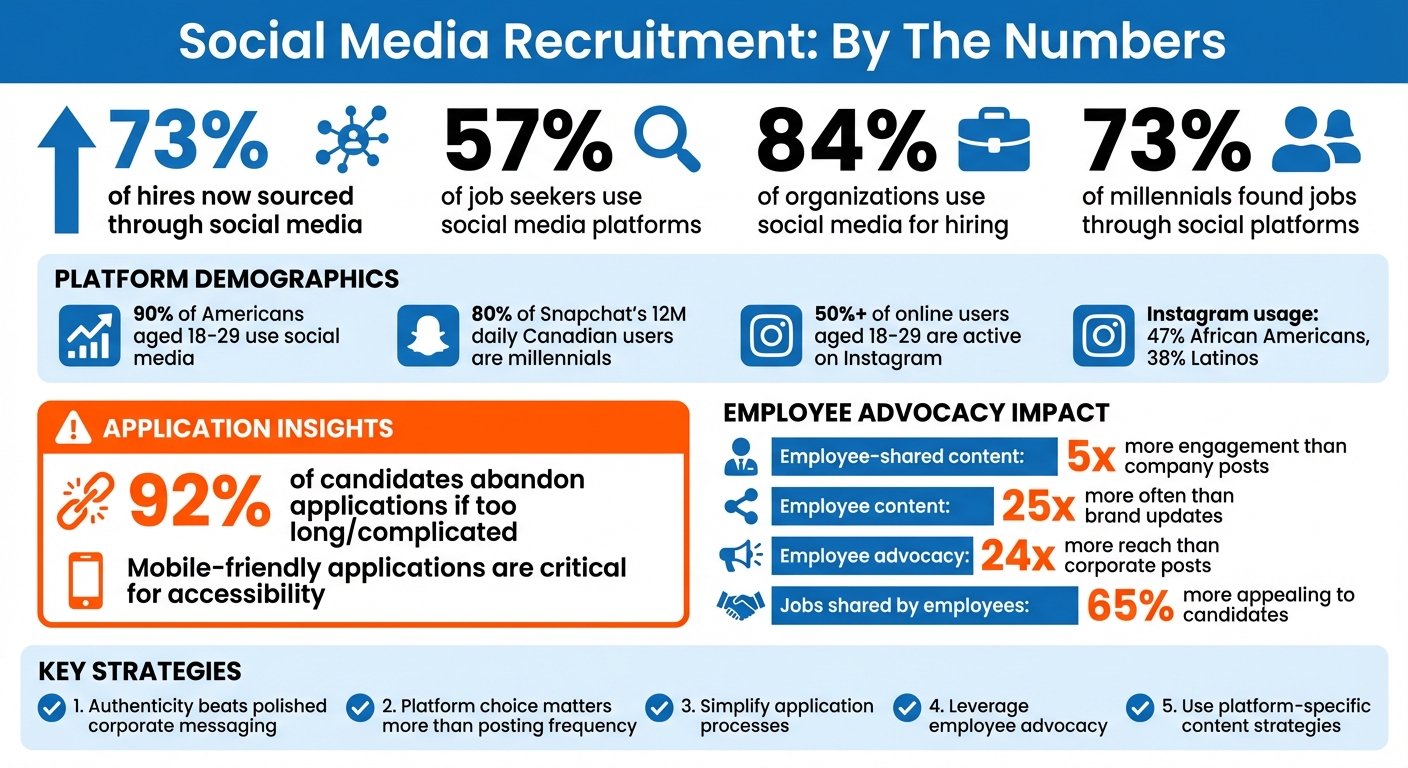
With 73% of hires now sourced through social media and 57% of job seekers using these platforms, companies are finding smarter ways to connect with potential employees.
Below are 10 social media recruitment examples of companies effectively using social media for hiring.
- UPS: Showcases day in the life videos and uses mobile friendly applications to attract Millennials and Gen Z.
- InnovateTech: Engages young talent with Instagram Stories, interactive polls, and behind the scenes content.
- GlobalEnterprises: Promotes diversity through Instagram Live panels featuring employee stories.
- StyleHouse: Partners with fashion influencers on Instagram to highlight workplace culture and job openings.
- ConsultCorp: Uses social media competitions to connect with college students and recent graduates.
- Makers Inc.: Encourages employee referrals via Instagram Stories and branded hashtags.
- Newell Brands: Embeds Spotify playlists and podcasts on their career site to share workplace insights.
- GILGA: Uses TikTok to create urgency with fast paced job announcements and simple landing pages.
- Land O’Lakes: Utilizes Facebook geo targeting to find candidates in specific locations.
- AWS: Maintains dedicated recruiting accounts across LinkedIn, Instagram, and TikTok to highlight open roles and company values.
Key Takeaways:
The social media recruitment examples above highlight what works across industries and platforms.
- Storytelling drives results. Companies like UPS and StyleHouse use videos and influencers to humanize their brand.
- Interactive content increases engagement. Polls, live Q and A sessions, and competitions encourage participation.
- Platform specific strategies win. TikTok works best for Gen Z, LinkedIn fits professional hiring, and Instagram supports creative roles.
- Simplified applications reduce drop offs. Mobile friendly processes and CRM tools improve candidate experience.
- Employee advocacy boosts trust. Content shared by employees often generates more reach and credibility than corporate posts.
By tailoring strategies to platforms and audiences, these companies show how social media transforms recruitment into a conversational, engaging, and results driven process.
Social Media Recruitment Examples: Statistics and Key Strategies
Social Media Recruitment Examples in 2025 – March 20, 2025 Webinar
1. UPS: Our Jobs Change Lives Campaign
UPS is one of the most cited social media recruitment examples for high-volume hiring. They took a bold step away from traditional job boards, embracing social media storytelling under the leadership of Matt Lavery, Director of Talent Acquisition. The shift was designed to resonate with Millennials and Gen Z, who often turn to search engines instead of job boards when seeking opportunities. The result? A campaign built on engaging, mobile-friendly content that truly connected with its audience.
Campaign Execution Approach in Social Media Recruitment Examples
At the heart of the campaign were 60–90-second "day in the life" videos that showcased various roles, company culture, and UPS’s focus on sustainability. These videos highlighted career growth by featuring senior leaders who started in entry-level roles. The company had fully optimized its application process for mobile devices – not just the job listings in 2012.
The campaign allowed candidates to search, watch videos, and apply directly from their smartphones, a crucial feature for those relying on mobile devices due to limited access to home internet.
Target Audience Targeting in Social Media Recruitment Examples
The main focus of the UPS campaign was on attracting Millennials and Gen Z for entry-level roles, especially during UPS’s busy holiday season when 75% of annual hires occur between October and December. The mobile-first approach made it easier for minority and low-income candidates to access job opportunities. They also targeted college students on holiday breaks, leveraging their comfort with social media and preference for visual over text-heavy content.
Social Media Platforms and Tools Used
Different social media platforms and tools were used to rolled out this recruitment strategy, including Facebook, Twitter (@UPSjobs), LinkedIn, YouTube, and Google Plus. The @UPSjobs Twitter account amassed over 38,000 followers, and hashtags like #UPSers and #ThankAUPSer helped amplify their reach. Through testing, UPS discovered that Tuesday afternoons saw the highest engagement, and posts with visuals performed far better than text-only updates. These insights drove their strategy, ensuring maximum engagement and improved hiring outcomes.
Results and Engagement Metrics
The results were striking. Starting with just 19 hires through social and mobile platforms in 2009, UPS catapulted that number to 24,475 by 2013, with projections of exceeding 30,000 in 2014. As Lavery noted:
"It’s more convenient to apply [for a job] through a handheld device, because so many candidates for those jobs couldn’t afford Internet at home".
2. InnovateTech: Instagram Stories for Young Talent
Did you know that InnovateTech provides one of the strongest social media recruitment examples for engaging younger talent? InnovateTech tapped into Instagram’s visual and interactive appeal to revamp its approach to social recruitment. Recognizing that Millennials and Gen Z spend a lot of time on Instagram and prefer dynamic, visual communication over traditional job postings, the company leaned into Instagram Stories. Instead of relying on polished corporate posts, they created an authentic narrative by sharing behind-the-scenes moments – office culture, team activities, and everyday operations – to make the workplace feel more relatable and human.
Campaign Execution Approach in Social Media Recruitment Examples
InnovateTech used Instagram Stories’ short-lived format to create a sense of urgency around job openings and updates. They shared "day-in-the-life" videos and employee testimonials to give candidates a genuine look at what working there is really like. Features like interactive polls, quizzes, and live Q&A sessions encouraged viewers to engage directly with the brand. The "Swipe Up" feature (available to accounts with over 10,000 followers) made it easy for users to jump from Stories to specific job landing pages. Employees also played a key role by sharing their experiences with the branded hashtag #LifeAtInnovateTech, which the company highlighted in its Stories.
Social Media Platforms and Tools Used
InnovateTech made smart use of Instagram’s tools to keep engagement high. "Employee Spotlights" and Story Highlights were used to save and showcase key content, ensuring it stayed accessible beyond the usual 24-hour window. Additionally, the company integrated its CRM system to track viewer activity – monitoring who watched Stories, answered polls, or participated in Q&A sessions. This data helped them identify high-interest candidates and follow up with personalized outreach.
Results and Engagement Metrics
The campaign paid off with measurable success. InnovateTech saw an increase in both the number and quality of job applications. The authentic, interactive content struck a chord with their target audience, and the CRM integration streamlined follow-ups with interested candidates.
3. GlobalEnterprises: Diversity and Inclusion via Instagram Live
GlobalEnterprises has embraced a unique way to promote diversity by using Instagram Live for real-time conversations, making it one of the standout social media recruitment examples focused on inclusion. Through this platform, the company hosted panel discussions and webinars where employees from diverse backgrounds shared their personal journeys and accomplishments. These live sessions allowed potential candidates to ask questions while offering a transparent look at a workforce where representation is visible and valued. As a result, this interactive approach laid the groundwork for targeted initiatives designed to foster inclusivity and attract underrepresented talent.
Campaign Execution Approach in Social Media Recruitment Examples
To align with key cultural moments like Black History Month, Pride Month, and International Women’s Day, GlobalEnterprises spotlighted individual employees, showcasing their contributions and creating relatable role models. They also collaborated with diversity advocates to amplify their recruitment efforts and underscore their dedication to inclusive hiring practices.
Target Audience Targeting in Social Media Recruitment Examples
GlobalEnterprises focused on reaching underrepresented groups by leveraging Instagram, a platform particularly popular among diverse audiences. For example, 47% of African Americans, 38% of Latinos, and over half of individuals aged 18 to 29 use Instagram. This made it an ideal channel to connect with younger talent, especially women.
Social Media Platforms and Tools Used
Instagram Live was the centerpiece of their strategy, supported by Stories and Feed posts to maintain engagement. They also integrated a CRM system to track audience demographics, session participation, and the impact of influencer collaborations. This data allowed for more personalized follow-ups and campaign adjustments.
Results and Engagement Metrics
The campaign successfully increased applications from underrepresented groups, enriching the diversity of their candidate pool. Collaborations with influencers and genuine stories from employees extended their reach and strengthened their reputation as an inclusive employer. Meanwhile, insights from CRM data helped fine-tune their ongoing efforts for even greater impact.
4. StyleHouse: Fashion Influencer Collaborations on Instagram
StyleHouse offers a creative social media recruitment example using influencer partnerships. StyleHouse teamed up with popular fashion influencers to provide a behind-the-scenes look at their facilities and production process. By doing this, they put recruitment efforts in the hands of trusted figures their audience already admired and followed. This approach worked because it tapped into the built-in credibility and reach of these influencers.
Campaign Execution Approach in Social Media Recruitment Examples
StyleHouse leaned into visual storytelling and live interaction to connect with potential talent. They hosted virtual fashion shows and live Q&A sessions on Instagram Live, often co-hosted by well-known fashion influencers. These sessions featured employees and company leaders discussing ongoing projects, workplace culture, and job openings. To make things even more engaging, they organized interactive design challenges during these live events. Participants showcased their creativity, with winners receiving prizes – and in some cases, even job offers. This created a direct link between audience engagement and recruitment.
Target Audience Targeting in Social Media Recruitment Examples
The campaign was aimed at style-savvy individuals who actively followed social media trends and had a keen interest in fashion. By leveraging the audience of their influencer partners, StyleHouse reached a community of fashion enthusiasts who valued openness and originality. This was a smart move, considering that over 50% of online users aged 18 to 29 are active on Instagram, and the platform tends to attract more women – perfect for filling roles in their design and marketing teams.
Social Media Platforms and Tools Used
StyleHouse made the most of Instagram’s interactive features, including Instagram Live and Stories. They also used a CRM to track user interactions, allowing them to identify highly engaged candidates for personalized follow-ups. Additionally, they monitored applications to see how many came directly from influencer-driven sessions, helping them measure the success of these collaborations.
Results and Engagement Metrics
The influencer-led strategy delivered higher engagement rates than traditional recruitment posts and fostered a dynamic, engaged community around the brand. StyleHouse saw a consistent flow of job applications from people who had joined their live sessions or participated in design challenges. The campaign’s focus on visual and interactive elements – offering an inside look at the company – resonated strongly with their target audience. It also reinforced StyleHouse’s image as a company that values creativity and originality. This approach highlighted the effectiveness of using authentic and engaging content to attract talent.
5. ConsultCorp: Campus Recruitment through Competitions
ConsultCorp took a fresh approach to campus recruitment by designing a multi-phase social media competition aimed at college students and recent graduates. Instead of sticking to traditional job postings, they created a dynamic challenge that allowed participants to showcase their skills and personalities while building a professional online presence. The process kicked off with a nomination phase, where students submitted 30-second videos explaining why they would make excellent brand ambassadors for the company. This strategy combined creativity with practical recruitment, offering a unique way to connect with potential candidates.
Campaign Execution Approach in Social Media Recruitment Examples
Over the course of three weeks, selected participants created and shared original content using targeted hashtags. They also received digital brand coaching and support from peers, turning the recruitment process into an engaging and gamified experience. This mentorship not only helped participants polish their professional social media profiles but also gave ConsultCorp a clear view of their potential contributions to the company.
Target Audience Targeting in Social Media Recruitment Examples
As a result, this campaign zeroed in on college students and recent graduates – groups that are highly active on social media. In fact, 90% of Americans aged 18 to 29 use social media, and nearly half of Gen Zers and Millennials have applied to jobs they discovered on these platforms. By meeting candidates where they already spend their time, ConsultCorp avoided the frustration of lengthy online applications, which often cause 92% of applicants to drop out.
Social Media Platforms and Tools Used
ConsultCorp relied primarily on Instagram and LinkedIn to connect with its audience. Instagram allowed for creative and visually engaging content, while LinkedIn added a professional edge to the campaign. To make the process more interactive, the company used skills assessment tools to gamify candidate evaluations, appealing to individuals who might not be drawn to traditional resume-based applications. Since most young professionals access social media on their phones, the campaign was fully optimized for mobile use.
Results and Engagement Metrics
Competition generated high-quality, authentic content, which was measured through reach and internal satisfaction surveys. The strategy proved highly effective, especially considering that 93% of people trust information shared by friends and family, compared to just 38% who rely on traditional advertising.
6. Makers Inc.: Employee Referral Campaigns on Instagram
Makers Inc. gave its employee referral program a fresh twist by turning to Instagram. The idea? Highlight real career growth stories from their employees and encourage them to share their journeys. This approach taps into a well-known recruitment advantage: referred candidates not only tend to be of higher quality but are also 70% more likely to stick around longer. It’s a smart way to elevate their hiring game.
Campaign Execution Approach in Social Media Recruitment Examples
The campaign combined genuine employee storytelling with clever use of technology. The centerpiece was success stories of internal mobility, shared through Instagram’s main feed and Stories. Employees posted their career experiences using the branded hashtag #MakersIncCareers, which the company reshared to amplify visibility. Instagram Stories played a key role, simplifying the referral process by breaking down the steps and rewards. Features like interactive polls and Q&A stickers further engaged employees, making it easy for them to suggest potential candidates.
Target Audience Targeting in Social Media Recruitment Examples
After the rollout, this campaign zeroed in on two main groups: current employees, who could act as brand ambassadors, and their extended social networks. This strategy was spot-on, considering that 73% of job seekers aged 18 to 34 found their last job through social media, and over half of online users aged 18 to 29 are active on Instagram. By tapping into employees’ networks, Makers Inc. reached passive candidates – those who weren’t actively job hunting but might be open to new opportunities.
Social Media Platforms and Tools Used
Instagram was the star of the show, with a dual approach: polished career stories on the feed and quick, casual updates about job openings on Stories. This setup showcased how digital tools can make talent sourcing more efficient. To streamline the process, Makers Inc. integrated a CRM system. This tool tracked which referral posts performed best, segmented employees by their skills, and automated follow-ups. By doing so, the company could measure what content resonated most and tailor outreach to both employees and the candidates they referred.
7. Newell Brands: Spotify Playlists and Podcasts on Career Site
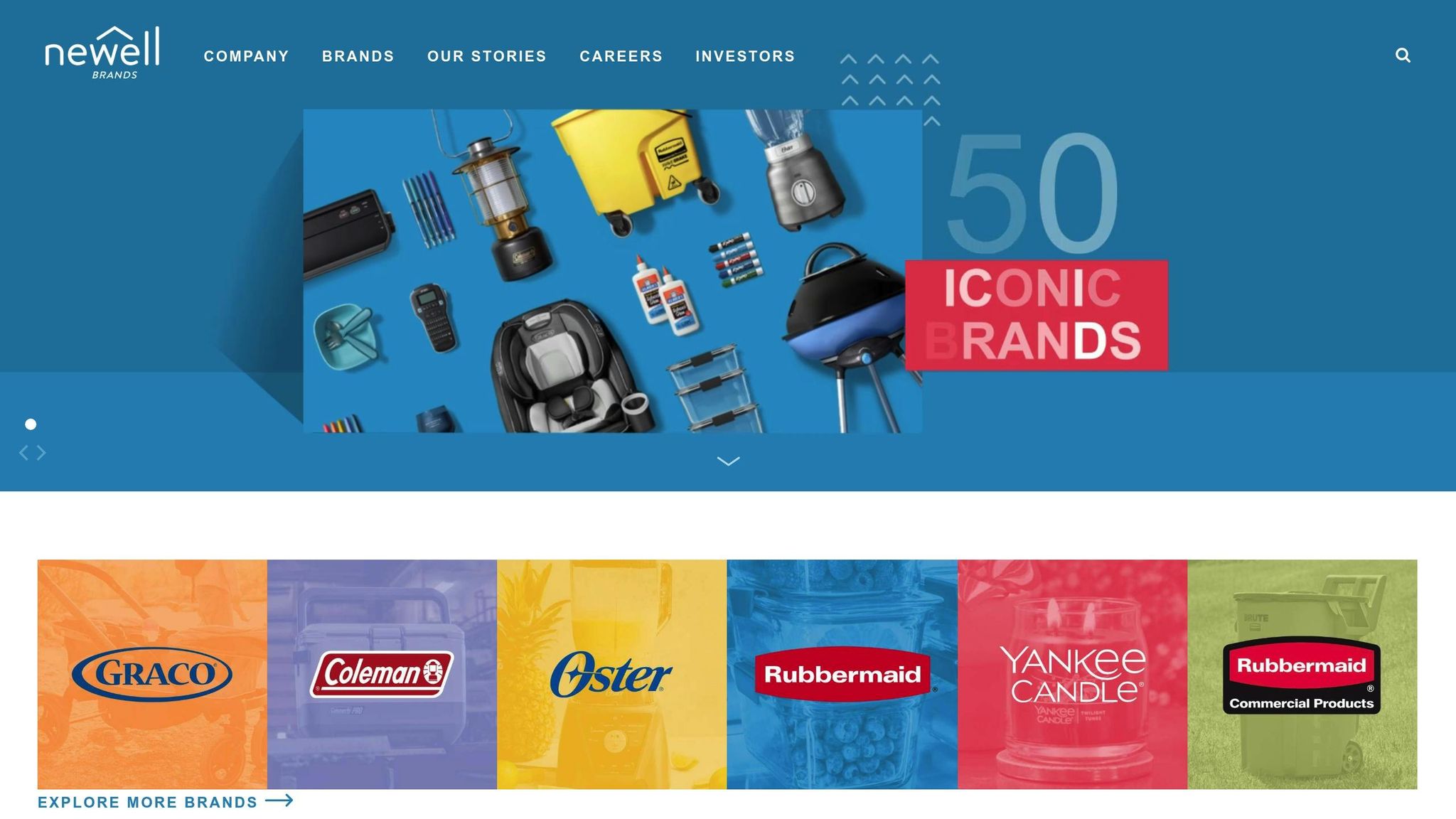
Newell Brands has taken a creative turn in its recruitment efforts by embedding Spotify playlists and podcasts directly onto its career site. This approach gives candidates a unique way to connect with the company – through sound. By tuning in, job seekers can get a feel for the culture at brands like Sharpie, Rubbermaid, and Coleman, experiencing the music and conversations that reflect everyday life at Newell. It’s a fresh way to leave a lasting impression on potential hires.
Campaign Execution Approach in Social Media Recruitment Examples
The campaign leans on podcasts and curated audio content to build a sense of trust with candidates in 2026. It showcases genuine employee experiences through sections like "Latest Stories" and "Our People". These features allow candidates to hear firsthand accounts from employees about their work, challenges, and achievements, painting a realistic picture of what it’s like to be part of the team.
Target Audience Targeting in Social Media Recruitment Examples
Newell Brands aims to attract driven professionals who thrive on challenges and want to contribute to iconic consumer brands. The company highlights opportunities for growth and the chance to lead impactful projects, which appeals to ambitious, career-focused individuals. This audio-based strategy is particularly effective with Gen Z and Millennials, who frequently use streaming platforms like Spotify and value genuine cultural insights when considering a job. Similar to other visual and interactive methods, this audio-focused approach demonstrates the power of using varied media to engage top talent.
Social Media Platforms and Tools Used
Spotify plays a central role in this strategy, with playlists and podcasts seamlessly integrated into the career site. This effort aligns with Newell Brands’ dedication to inclusivity and diverse leadership. By featuring voices from across the organization, the audio content illustrates the supportive and collaborative workplace candidates can expect to join.
8. GILGA: TikTok-Powered Urgent Job Landing Pages
GILGA is one of the most unconventional social media recruitment examples on TikTok. Donald Glover’s creative production company, GILGA, decided to shake things up in the world of recruitment by ditching traditional job boards in favor of TikTok. The idea? Use the platform’s fast-paced, engaging video format to create a sense of urgency. These short videos acted as "calls for talent", directing potential candidates to a simple, no-frills landing page at gilga.com. Instead of a standard corporate careers site, applicants were met with specific, time-sensitive job postings and the ability to upload their portfolios or video resumes on the spot.
Campaign Execution Approach in Social Media Recruitment Examples
The campaign leaned heavily into TikTok’s quick, attention-grabbing style. Each video announcement highlighted immediate openings for specialized roles, encouraging creative professionals to act fast. The landing page mirrored this urgency with a minimalist design, stripping away unnecessary corporate fluff to focus solely on the job opportunities.
Target Audience Targeting in Social Media Recruitment Examples
The approach was laser-focused on Gen Z and Millennials – groups known for finding brands and researching employers through social media. TikTok, in particular, resonated with younger professionals and recent graduates, especially those in the 18 to 29 age range. By tapping into this demographic, GILGA successfully reached tech-savvy, creative individuals who appreciate innovative and unconventional ways to apply for jobs.
Social Media Platforms and Tools Used
While TikTok was the star of the campaign, Instagram played a supporting role by sharing similar short-form videos. This combination helped GILGA expand its reach while maintaining the campaign’s focus on urgency and exclusivity, ensuring it connected with the right creative talent.
9. Land O’Lakes: AI Geo-Targeted Facebook Ads
Land O’Lakes, a Minnesota-based agricultural cooperative, turned to Facebook’s AI-powered advertising tools to address a familiar recruitment hurdle: finding qualified candidates in specific geographic areas. By leveraging Facebook’s AI-driven geo-targeting, they were able to deliver job postings directly to professionals in the desired locations.
Campaign Execution Approach in Social Media Recruitment Examples
The team at Land O’Lakes utilized Facebook’s automated boosting feature to refine their targeting based on location, education, and work experience. This allowed recruiters to concentrate their efforts on candidates in specific cities or regions.
Target Audience Targeting in Social Media Recruitment Examples
The campaign was designed to reach both active job seekers and passive candidates. Using Facebook’s advanced targeting capabilities, they zeroed in on niche audiences by job titles, industries, and candidate profiles.
Social Media Platforms and Tools Used
Facebook was the central platform for this initiative, with its AI-driven ad system managing audience segmentation by location, education, and work experience. This level of precision ensured that Land O’Lakes connected with candidates who not only met the qualifications but were also ideally situated for the roles. This data-focused strategy reflects the forward-thinking recruitment methods explored throughout this article.
10. AWS: Dedicated Recruiting Social Media Accounts
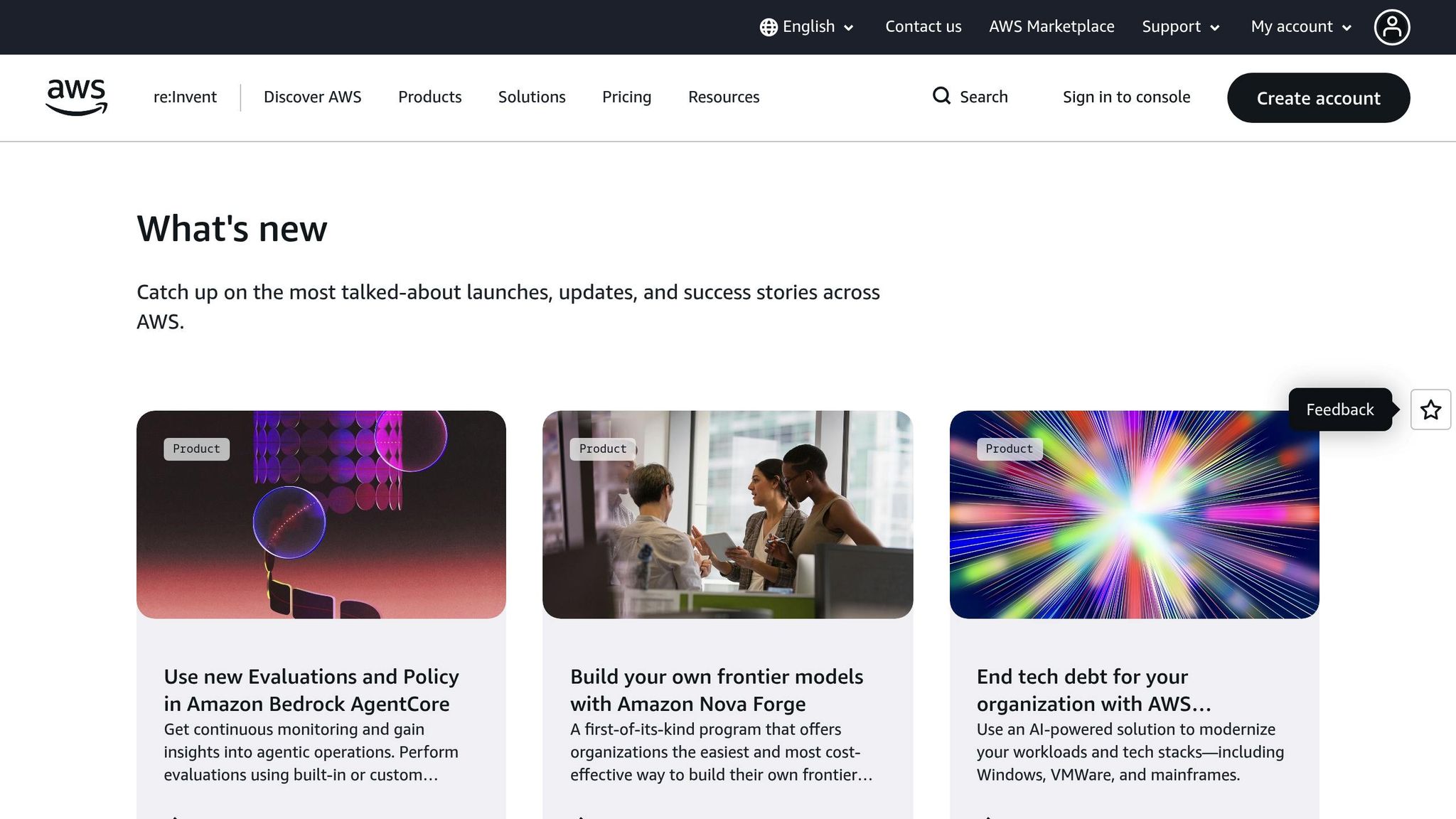
AWS has taken a smart approach to social media recruitment by creating accounts specifically for hiring purposes. These dedicated recruiting accounts help Amazon Web Services (AWS) establish a clear employer brand, keeping recruitment content separate from consumer-oriented messaging. Using a structure like "Inside [Company]", AWS shares employee stories and showcases open positions. This visual-first strategy highlights AWS’s workplace culture and values in action.
Target Audience Targeting in Social Media Recruitment Examples
The focus of these accounts is on both active job seekers and professionals who might be passively exploring new opportunities. By keeping recruitment content distinct from consumer messaging, AWS speaks directly to individuals who are eager to grow their careers. This tailored approach ensures the messaging resonates with career-minded professionals.
Social Media Platforms and Tools Used
AWS taps into several platforms to connect with potential candidates. LinkedIn is used for professional insights, X (formerly Twitter) for timely job updates, and Instagram and TikTok for engaging, visual storytelling. This multi-platform strategy ensures AWS can reach a wide variety of professionals wherever they spend their time online.
What These Social Media Recruitment Examples Teach Us
Looking at these campaigns reveals strategies that consistently boost engagement and hiring success, especially when companies focus on creating strong social media recruitment content that attracts the right candidates. These social media recruitment examples show how authenticity, platform specific tactics, and employee advocacy can reshape recruitment results.
t is also important to weigh the social media recruitment advantages and disadvantages before committing to one strategy.
Choosing the right channel matters. Our guide to the Best Social Media Platforms for Recruitment in 2026 breaks down where different roles and demographics perform best.
Authenticity beats polished corporate messaging. People trust personal recommendations more than corporate statements. For instance, DaVita’s employee advocacy program led to a 136% increase in LinkedIn traffic and a 27% jump in job applications.
Platform choice matters more than posting often. McDonald’s Canada nailed this with their "Snaplications" campaign. Recognizing that 80% of Snapchat’s 12 million daily Canadian users were millennials, they invited candidates to submit 30-second video resumes directly through the app..
The application process itself is critical. A staggering 92% of candidates abandon job applications if they’re too long or unnecessarily complicated. The most successful campaigns simplify this step by integrating tools like QR codes, "Easy Apply" buttons, or even gamified assessments to make applying seamless and engaging.
Employees are your best recruiters. Content shared by employees generates 5x more engagement compared to company posts, and employee-generated content is shared 25 times more often than official brand updates [6, 21]. NJ Transit tapped into this by showcasing their employees and community initiatives on social media, leading to a 60% increase in resumes for bus operator positions.
These examples highlight how authentic, streamlined, and employee-driven social media strategies can attract top-tier talent effectively.
How HireLab.io Supports Social Media Recruitment Examples
HireLab.io brings a fresh perspective to recruitment by leveraging technology to boost social media campaigns. Crafting effective campaigns requires more than just posting job ads – it involves creating optimized landing pages, user-friendly forms, and tools that work seamlessly across platforms. HireLab.io simplifies this process by helping companies design mobile-friendly career pages that showcase company culture through eye-catching visuals. These tools ensure your recruitment efforts stand out.
To tackle one of the biggest pain points – candidate drop-offs – HireLab.io offers smart forms that remove unnecessary hurdles. Forget asking candidates to create accounts or fill out endless fields. Instead, the platform supports easy resume uploads and keeps the application process as smooth as possible.
For those running campaigns on multiple platforms, HireLab.io makes management effortless. With just one click, you can post job openings across various social channels and track every application from a single dashboard.
The platform also excels at customized landing pages tailored to specific roles. This feature helps you analyze how well your talent pipeline is performing for targeted segments, whether you’re hiring for tech roles or other specialized positions.
What really sets HireLab.io apart is its AI-powered page builder and campaign tools. These tools adjust messaging to fit the unique audience of each platform. For instance, you can use short-form videos to connect with Gen Z on TikTok, share professional content on LinkedIn, or tell a visually compelling story on Instagram. This adaptability ensures your recruitment strategy hits the mark no matter where you’re advertising.
Conclusion
The examples above highlight how social media can transform recruitment when used strategically. It’s not just about posting job openings; it’s about showcasing your company’s personality, encouraging employees to share their experiences, and tailoring content to fit the style and audience of each platform.
Consider this: over 84% of organizations use social media for hiring, and 73% of millennials have landed jobs through these platforms, proving the real benefits of social media recruitment for modern hiring.
Why? Because employee advocacy works. Content shared by employees generates 24 times more reach than corporate posts and makes job openings 65% more appealing to potential candidates.
To get the best results, focus on mobile-friendly applications, targeted ads, and content designed for specific platforms. TikTok can help you connect with Gen Z, while LinkedIn is ideal for reaching experienced professionals. Matching your message to the platform’s audience is critical.
Tracking metrics like time-to-hire and cost-per-hire allows companies to fine-tune their strategy using real-world data. Combine these tools with authentic storytelling, and you’re set to elevate your recruitment game.
Start by sharing genuine employee stories and simplifying your application process. Use technology to create engaging landing pages and manage applications across multiple platforms with ease. Keep analyzing platform performance and adjust your tactics to see what works best.
These social media recruitment examples highlight what’s possible when companies fully embrace modern hiring strategies outlined in Social Recruitment: What It Is and Why Your Company Needs It.
It’s time to put these strategies into action. Social media recruitment isn’t just a trend – it’s a powerful tool for finding the right talent.
FAQs
How can companies use social media to attract and hire diverse talent?
Companies can tap into the power of social media to connect with a wide range of talent by meeting candidates where they already spend their time – platforms like Instagram, LinkedIn, TikTok, and Facebook. Each of these platforms attracts different audiences. For example, Instagram is a favorite among younger users and has a strong reach within African-American and Latino communities in the U.S. To genuinely engage with diverse candidates, businesses should highlight real stories from employees, share behind-the-scenes videos, and showcase images that reflect their dedication to inclusion. Using a variety of formats – like short videos, carousel posts, or live Q&A sessions – can grab the attention of both active job seekers and passive candidates scrolling through their feeds.
To make the most of these efforts, companies should pair targeted advertising with employee advocacy. Ads can be tailored to specific locations, professional groups, or hashtags such as #WomenInTech or #LatinxLeadership to connect with underrepresented groups. Meanwhile, encouraging employees to share job openings and their personal experiences working at the company extends the message’s reach and builds credibility. A good example of this strategy in action is a company that boosted applications by 136% through a well-executed LinkedIn campaign, showing the impact of data-driven social recruiting. By keeping an eye on metrics like engagement rates and applicant demographics, businesses can refine their approach and strengthen their diversity hiring efforts.
What are some creative ways to attract passive job seekers using social media?
To connect with passive job seekers, companies are turning to short-form videos on platforms like TikTok, Instagram Reels, and LinkedIn Stories. These videos highlight employee experiences, unique perks, or even a "day in the life" at the company. The goal? To grab attention and spark curiosity among people who aren’t actively job hunting. Live Q&A sessions or employee takeovers also offer a real-time, unfiltered glimpse into the workplace, encouraging interaction and boosting trust.
Another creative strategy is gamification – think quick skill quizzes or fun challenges embedded in posts. These make the process feel less formal and more engaging. Companies also expand their reach through employee advocacy, where team members share personal stories, behind-the-scenes content, or referral opportunities. On top of that, interactive content like polls, hashtag challenges, or contests invite passive candidates to engage in a natural and fun way. For those who prefer a no-pressure approach, tools like chatbots on LinkedIn or Facebook Messenger can answer questions, provide quick details, or guide candidates through a brief "fit" quiz, making it easy and approachable to explore opportunities.
How does employee advocacy improve social media recruitment?
Employee advocacy turns your team into a recruitment powerhouse by motivating them to share job openings, company culture highlights, and personal success stories on their social media. Why does this work so well? Because people trust recommendations from friends and colleagues far more than corporate ads. This kind of sharing feels genuine, sparks more engagement, and reaches far beyond what traditional recruiting methods can achieve.
Here’s how this strategy supercharges social recruiting:
- Broader Reach: By tapping into employees’ personal networks, you expose job opportunities to a much larger and more diverse audience.
- Stronger Employer Brand: Real stories from employees make your company feel approachable and appealing, giving potential candidates a glimpse of what it’s like to work there.
- Better Results: People are more likely to trust and act on referrals from someone they know, making these posts incredibly effective.
Encouraging your team to share hiring updates or celebrate milestones doesn’t just help attract top talent – it also builds a positive, relatable brand image that resonates with candidates.